What I'd read first on this page
My ears used to ruin the first ten minutes of every dive. I'd hit 4 meters, feel that familiar pinch, force a Valsalva, and surface with a dull ache behind my eardrum. Then a 20-year instructor watched me descend at a dive site off the North Carolina coast and said, "You're treating equalizing like a single move. It's a rhythm." That one shift — backed by a trip to an ENT who specializes in divers — changed everything. These scuba equalizing tips are what I actually use now, not the textbook version.
Let's get the anatomy straight first. Your eustachian tube connects the middle ear to the back of your nose. On descent, pressure builds outside and the tube collapses. Equalization is just opening that tube a little, early and often. Divers from DAN (the Divers Alert Network) call it a pressure injury risk when ignored — and they're right. The tips below focus on preventing descent-induced ear barotrauma before it starts.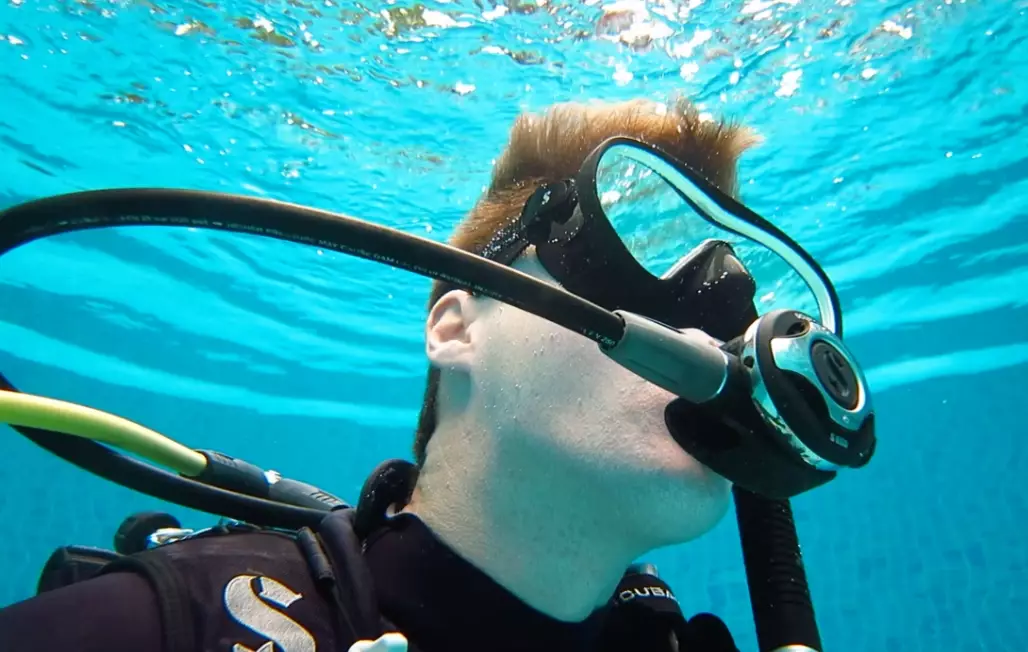
Pre-Dive Prep: The 24-Hour Equalizing Window
Most divers think equalizing starts at the surface. Wrong. It starts the day before, especially if you're congested.
I now do a simple test at home: hold my nose, gently blow, and listen for a soft click in each ear. If one side sounds muffled before I'm even near water, I don't dive. That click tells me the tube is patent. Without it, I'm setting myself up for pain.
Other prep that actually helps:
- Hydrate the night before. Dehydration thickens mucus, which blocks the eustachian tube. I aim for 2 liters of water the day before a dive.
- Avoid dairy-heavy meals 12 hours pre-dive. Personal observation, but three dive buddies in my club report the same effect — thicker mucus, harder equalizing.
- Saline nasal spray the morning of the dive. Not decongestants. DAN's medical guidance specifically warns that taking pseudoephedrine then diving can cause rebound congestion at depth — the worst possible time for closed tubes.
- Do a few gentle equalizations in the hotel room. Just five slow, soft nose-pinches to remind the tubes what "open" feels like.
Equalizing Techniques Ranked (and When Each Fails)
There are five methods I actually teach. The ranking below is based on how reliably they work under real dive conditions, not how famous they are.
| Rank | Method | When It Works | When It Fails |
|---|---|---|---|
| 1 | Frenzel maneuver | Most dives, especially deeper descents | Early in training — needs tongue control |
| 2 | Low-force Valsalva | Shallow, simple dives | Depth below 5 m, sinus congestion |
| 3 | Partial Valsalva plus swallow | When one ear is stubborn | Long descents; breaks rhythm |
| 4 | Voluntary tubal opening (yawning/ jaw shift) | Descents at 1–2 meters; frequent flyers | Divers with narrow tubes, allergies |
| 5 | Hands-free (requires practice) | No pinch needed | Takes months of daily practice |
Why Frenzel first? It uses your tongue to push air up the eustachian tube instead of your diaphragm. Less pressure on the middle ear. I switched in my second year of diving and have not had ear pain since.
Here's a mistake coaches rarely mention: most divers equalize during the descent, but the tube needs to open before the pressure change. So on a descent, I equalize at the surface, then at 1 meter, 2 meters, 3 meters. Then every meter. By the time I'm at 10 meters, I've done ten gentle clicks. No squeezing. No forcing.
How to Equalize on Descent Without Forcing It
This is the part where most scuba equalizing tips get vague. Let me give you the exact sequence I run on any descent.
Step one: control the line
Use a descent line when possible. I hold the line with my left hand so my right hand is free to pinch my nose. On open-water descents without a line, I let myself sink slowly — a foot every two seconds.
Step two: equalize early, before you feel anything
I equalize at the surface, then three times in the first two meters. Some of those clicks are barely audible. That's fine. That's the point.
Step three: if you feel a squeeze, stop the descent
Do not push down. Ascend half a meter, equalize with a gentle Frenzel, then continue. New divers often push straight through a failing equalization because they're embarrassed about slowing the group. Don't be. Ear barotrauma means a ruined dive week for you, and I've seen it happen at 3 meters.
Step four: jaw and neck micro-movements
When you feel the tube starting to close, tilt your head slightly toward the ear that won't clear and make a slow jaw shift. A subtle swallow. I learned this from a dive master in Cozumel and it's the single most useful “scuba equalizing tip” I've ever received.
Ear Won't Clear at Depth? Troubleshooting Checklist
Let's say you've tried everything and the right ear just won't equalize at 8 meters. This is where people panic. Run these checks:
- Check your posture. Are you looking down? That compresses the neck and pinches the eustachian tube. Look straight ahead or slightly up.
- Check your mouth. A clenched jaw blocks the tube. Let it hang slightly, as if you're about to speak.
- Check your mask. A tight mask strap pulls on the side of your head. Loosen it one notch.
- Check your equalization force. Gentle. If it takes effort, your tube is not the problem — you're probably trying to clear it at a point where it's already inflamed.
- Check your congestion level the night before. Did you eat a full pasta meal at 9 p.m.? I now eat dinner before 7 p.m. and drink water after. Simple, but it changed my morning ear readiness.
Another subtle error that rarely gets mentioned: many divers hold their regulator with their teeth and pinch their nose with the same hand. That rigid jaw position makes equalization harder. I pinch using my thumb and index finger on the bottom of the nose, keeping the regulator loose. Small change, big difference.
Diver Questions I Get Every Week
I equalize fine on the first dive but my ears refuse to clear on the second dive of the day. Why?
This is almost always post-first-dive inflammation, not "inexperience." The first descent remodels the eustachian tube lining slightly. Give yourself a longer surface interval (I wait 2 hours, not 1) and do one gentle equalization test before the second descent. If even one ear feels muffled at the surface, skip the dive. There's no scuba equalizing tip that fixes inflammation — you need recovery time.
Do decongestant pills actually help scuba equalization?
They're risky. I've seen divers take one, equalize beautifully on the way down, and then get a sudden reverse block on the way up when the pill wore off and the tissue swelled. That's a serious injury. If you must dive and are near congestion, use saline nasal spray before the dive, not oral decongestants. The spray doesn't cause rebound swelling.
My Valsalva works to 5 meters and then stops. What should I change?
Switch to the Frenzel maneuver. Valsalva pushes with the diaphragm and gets stiff at depth because the air you're pushing is dense. Frenzel uses the tongue to push a small pocket of air — much more effective below 5 meters. Practice it dry: fill your cheeks with air, hold your nose, and raise your tongue toward your palate until you hear a click. It takes a few evenings of practice, but it replaced Valsalva for me entirely.
Is it okay to keep diving after a mild ear squeeze?
No. That dull ache or muffled feeling after a dive means a minor barotrauma. Diving again before it settles (usually 24–48 hours) is how minor squeezes turn into worse injuries. I once ignored a mild squeeze and sat out three days of a gorgeous Maldives trip. Not worth it.
One last thing. I've dived in the Red Sea, the California kelp, and a cold freshwater quarry. Every single environment changed how my ears behaved. Cold water tightens the face; dry desert air thickens mucus. Adjust the pre-dive hydration and the descent pace. These scuba equalizing tips are a framework, not a rigid protocol.
This page was written from personal teaching notes and checked against divers' medical guidance from the Divers Alert Network and a land-based ENT consult. No dry theory here — everything above has been tested underwater.
Leave a Comment