Planning a dive isn't just about checking the tide chart. After 12 years of diving—and a few embarrassing aborted attempts—I've learned that a solid plan is what separates a smooth day out from a stressful one. If you're searching for how to plan a dive, here's the exact process I follow. No fluff, just what works.
⚡ Quick navigation
1. Pick Your Site with Purpose
Before you even think about gear, decide why you're diving. Are you practicing skills? Chasing a specific fish? Photographing nudibranchs? The site should match your goal. For example, if you're working on buoyancy, a shallow sandy bottom with a mild current (like Blue Heron Bridge in Florida, at 5–10 ft depth) beats a deep wall. If you want macro life, muck sites in Anilao, Philippines, are your friend.
I always check three things: access (can I park legally?), entry/exit (is there a ramp, or do I need to swim?), and known hazards (jellyfish season, fishing lines). A quick call to a local dive shop gives you the latest beta—something online maps won't tell you. For tide and current predictions, I rely on NOAA Tides & Currents (tidesandcurrents.noaa.gov) for US sites, and local harbor master reports elsewhere.
2. Check Conditions Like a Local
Weather apps are fine, but local knowledge wins. On a trip to Monterey, California, a generic forecast showed calm seas. The harbor master's note, however, warned of a 4-ft surge at the breakwater. That's the kind of detail you only get from a human.
Here's what I check:
- Tide range (more than 5 ft swing? Plan entry/exit timing carefully)
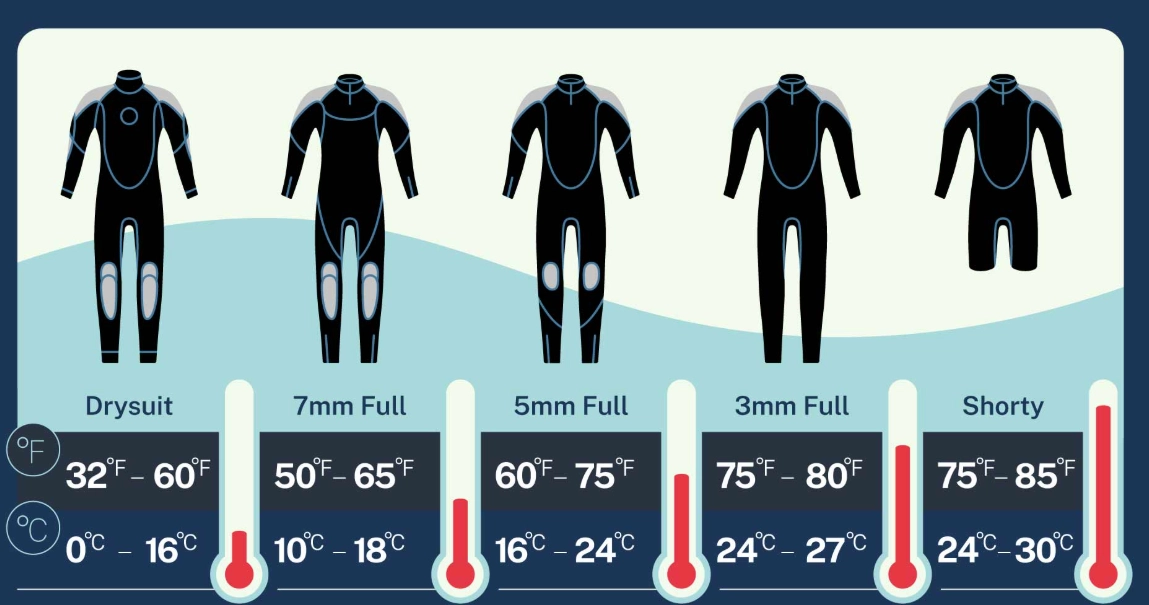
- Water temp (my 5mm wetsuit is good to 64°F; below that, I add a hooded vest)
- Visibility reports from local forums or shops (a 30-ft viz day is a gift—never assume it)
- Wind forecast: anything over 15 knots makes surface intervals miserable
I keep a screenshot of the tide table for the exact dive window. No cell signal at the site means no last-minute surprises.
3. Assemble Your Team and Assign Roles
More buddies don't always mean more safety. I cap my team at four divers. Beyond that, communication breaks down. Assign specific roles before the dive:
- Dive leader (navigates, keeps time)
- Gas planner (calculates turn pressure, shares it)
- Surface support (if boat diving, someone stays on board)
During a dive in the Florida Keys, I saw a group of six ignore this. Two divers surfaced early, confusing the count. The boat captain spent 20 minutes thinking someone was missing. Not fun. Now I always do a headcount at the surface, and I make sure every buddy pair has a predetermined lost-diver procedure (search for 60 seconds, then surface).
4. Plan Your Gas (Rule of Thirds)
The rule of thirds: one-third of your gas for the outward journey, one-third for the return, one-third reserve. It's simple and works for most recreational dives. But here's a nuance I see new divers miss: if you're diving with a larger buddy, you need to plan based on the higher consumption rate. My buddy breathes like a vacuum cleaner—so I calculate using his SAC rate, not mine.
Let's say we're at 60 ft. His SAC is 0.8 cu ft/min. A 20-minute bottom time means he uses 16 cu ft at depth (0.8 × 3 atm). Using an AL80 (77 cu ft usable), the rule of thirds gives him 25.6 cu ft turned pressure. I plan my turn pressure to match his, even though my SAC is lower. No one gets left with a dry tank at the safety stop.
5. Gear Up with a Checklist
I used to wing it with gear. Then I forgot my weight belt on a boat trip to Catalina. Twice. Now I use a checklist, and I physically touch each item. Here's my core list:
| Gear | Check | Notes |
|---|---|---|
| BCD | Inflate/deflate, dumps work | Check O-rings for wear |
| Regulator | Breathe from both second stages | Look at the IP gauge if you have one |
| Computer | Battery > 50%, set to dive mode | Sync time with buddy |
| Wetsuit | Zip, seals clean | Rinse with fresh water after every trip |
| Weights | On the belt, buckle secure | Distribute evenly |
| Mask/Fins | Strap intact, no cracks | Spare mask strap in save-a-dive kit |
That save-a-dive kit? Mine has a spare mask strap, two zip ties, a mouthpiece, and a set of O-rings. It fits in a small dry bag. Cost about $25. It has saved three dives so far.
6. Emergency Plan: Beyond the Surface Interval
Everyone talks about lost buddy procedures, but few plan for a medical emergency. Do you know where the nearest recompression chamber is? I do—because I write it on my slate. For a dive in Grand Cayman, it's the Hyperbaric Chamber at George Town Hospital (about 10 minutes from most west coast dive sites). In Monterey, it's the Monterey Bay Hyperbaric Facility. Note the address and phone number. If you're traveling, ask your dive operator for the chamber contact before you splash.
Also, decide on an emergency action plan: Who calls 911? Who secures the boat? Who stays with the injured diver? We run through this in 30 seconds before every dive. Sounds overkill until it isn't.
7. Pre-Dive Briefing and Log Review
The briefing is not a formality. I use a simple structure: site overview, entry/exit plan, max depth, turn pressure, emergency procedures, and hand signals. Then I ask each buddy to repeat back the turn pressure. If they can't, we don't dive. Harsh? Maybe. But it's saved me from diving with someone who wasn't mentally present.
Finally, I log the dive immediately after. Not just depth and time—I note the current direction, any gear issues, and what I'd do differently. That log has become my personal planning database. I can look back and see that the site I'm about to dive had a ripping current at 10 am last time, so I'll plan for an earlier start.
FAQs I Get Asked a Lot
How do I plan a dive when my buddy has a much higher air consumption rate?
Plan the dive based on the buddy with the higher SAC rate, not an average. Calculate turn pressure using that person's consumption, and agree that the low-air diver will signal at half of their reserve. It's safer to end the dive early than to surface with a panicked buddy.
What's the most common dive planning mistake you see?
Skipping the turn pressure check during the briefing. Divers assume everyone knows it, but in a group of four, at least one person will have forgotten or misunderstood. Verbal confirmation takes 10 seconds and prevents a chain of problems.
Do I need a dive computer to plan a dive?
You can plan with tables, but a computer gives you real-time tissue loading. For multi-level dives or repetitive dives, a computer is more than a convenience—it's a safety tool. I still carry backup tables, but I haven't used them in years.
How far in advance should I start planning a dive trip?
For local shore dives, 24 hours is enough—check tides and weather. For travel, start 2–3 months out for gear servicing (regulators need annual service) and booking dive operators. Last-minute gear failures are the top reason trips get canceled.
Planning a dive is a skill you build with each splash. The more you practice these steps, the faster they become second nature. And when something goes sideways—because it will—you'll have a solid framework to fall back on. That's what keeps you diving for decades.


Leave a Comment