I’ll be blunt. Most buoyancy advice online comes from instructors who haven’t fumbled a safety stop in years. I have. Last winter, I watched a diver burn through 80 bar in 12 minutes trying to hover over a coral head in Raja Ampat. That was me three years ago. So this isn’t theory. It’s the field-tested how to improve buoyancy playbook I wish someone handed me on day one.
What I’m Covering (So You Can Jump Around)
The Weighting Trap (Most Divers Carry Too Much)
Here’s a non-consensus take: you’re probably not bad at buoyancy. You’re just over-weighted. I’ve seen open water divers with 8 kg in a 3mm shorty. That’s not caution—that’s a recipe for a popped BCD and a bruised ego.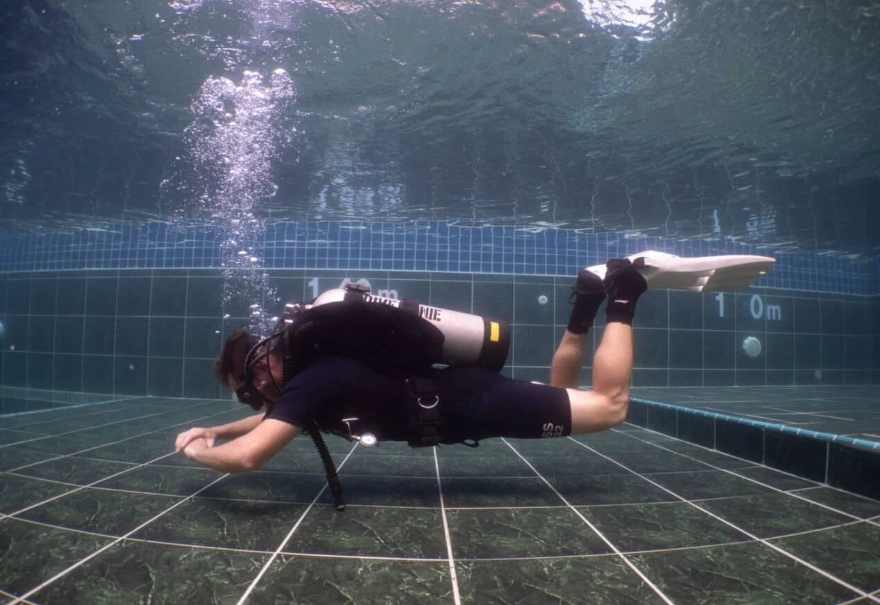
The standard “check” most courses teach (deflate BCD on the surface, see if you sink) is half right. The real test I use now involves an almost-empty tank. Ask your buddy to watch your safety stop at 5 m with 50 bar left. If you can hold that stop without inflating your BCD, your weighting is close. If you’re kicking to stay down, you’re heavy.
- Freshwater vs. saltwater: I always add 2–3 kg for saltwater if I’m using the same kit. But I check it at the surface—not during the dive.
- Aluminum vs. steel: Aluminum tanks grow lighter as they empty. Steel tanks stay heavy. That’s why a steel tank feels perfect at the start and like a brick at the safety stop.
- Wetsuit compression: A new 5mm suit compresses over a week of diving. By day three, that 1.5 kg you wore on day one becomes 1.2 kg. I keep a 0.5 kg pouch in my pocket for day-one dives.
I keep a small notebook with weight logs: exposure suit, tank type, water type, weight used, and how the safety stop felt. No, it’s not sexy. But after five logged dives, the pattern is undeniable.
Why Trim Beats Buoyancy Every Time
Buoyancy is up-down. Trim is horizontal. Divers fixate on the up-down part and ignore the fact that a horizontal diver slips through the water without a single fin kick. I spent my first 30 dives in a “seated” position, dragging my legs. Then a divemaster in Anilao (Philippines) told me to put my arms forward and look down. The difference was immediate.
Here’s the trim checklist I run through underwater:
- Knees bent at 90 degrees, ankles relaxed. If my fins are pointing down, I’m braking.
- Hands in front or tucked close. Dangling arms act like speed brakes.
- Tank position: A tank that sits too low pushes your head down and feet up. I move my tank up 5 cm. It feels weird on land. Underwater, it’s magic.
- Head level, not looking up. Looking up makes your chest rise and your feet sink.
If you can’t hover motionless for 30 seconds without sculling, trim is the problem—not the BCD.
Breathing Timing: The Silent Fix
Most people breathe like they’re trying not to be heard. Shallow, fast breaths keep you bouncing up and down like a yo-yo. The real trick isn’t breathing slowly. It’s breathing with your buoyancy, not against it.
Try this on your next shallow dive: inhale fully for 5 seconds, then hold for 1 second, then exhale for 7 seconds. Do it at 6 meters, motionless. Watch how your body moves. You’ll feel a clear rise on the inhale and a gentle sink on the exhale. Now use that. When you’re approaching a reef, exhale a bit more before you need it. When you’re rising too fast, stop inhaling. That’s it.
I once watched a diver in Palau bounce between 8 m and 4 m repeatedly on a safety stop. His BCD wasn’t the problem. His breathing was rapid-fire. After switching to long exhales, he held 5 m without a single inflator press.
Gear Tweaks That Change Everything
Your gear is either fighting you or helping you. There’s rarely an in-between. Here’s what I’ve changed over the years:
| Gear Item | What I Changed | Why It Mattered |
|---|---|---|
| BCD | Swapped a jacket-style BCD for a backplate-and-wing | Less drag, better trim, and my legs stopped sinking |
| Fins | Moved from stiff paddles to medium-flex jet fins | Reduced ankle strain and allowed soft flutter kicks |
| Weight belt | Moved 2 kg to trim pockets on the tank band | Kept my head down and legs up—instant trim fix |
| Exposure suit | Added a 1mm vest under a 3mm in 26°C water | Stopped shivering on second dives—shivering ruins buoyancy |
3 Drills I Do Every First Dive
These aren’t instructor-sanctioned. They’re the ones I actually do when nobody’s watching.
- The “hover box” drill: Pick a patch of sand (or a mooring line). Hover 1 meter above it for 60 seconds. No hands, no fin movement. Just breath. Do it at 5 meters, then 10 meters. This builds subconscious body awareness.
- The “fin pivot”: Lie flat on the bottom (sand or a shallow ledge). Inhale slowly until you rise 20 cm. Exhale until you settle back. Do it 10 times. This trains the link between breath and buoyancy.
- The “no-BCD” safety stop: At your safety stop on the last day of a dive trip, try holding 5 meters for 3 minutes without touching your inflator. If you can do it, your weighting is dialed. If you can’t, you’ve just found your new project.
Real-World Scenarios (Reef, Wreck, Silty Bottom)
Buoyancy isn’t a pool skill. It’s a situational skill. Here’s how I adapt.
Over a delicate reef
I add an extra 0.5 kg to my weight pouch—not to sink faster, but to make my exhale more effective. That little extra weight means I can hover higher because I’m not fighting to stay neutral. I also use a 2 mm hood in warm water to cut drag on my head. Weird? Maybe. But my air consumption dropped 15% on one trip to Komodo.
Inside a wreck (dark, silty)
Silt ruins visibility. I hover 2 m above the floor and keep my inflator in my left hand—index finger on the button—so I can react instantly. The worst thing you can do in a wreck is kick to adjust buoyancy. Use your breath first, inflator second. I learned that after accidentally stirring up a 10-minute silt-out in a Chuuk Lagoon wreck. Never again.
Silty bottom (muck diving)
In Lembeh, I dive with a heavy 7mm wetsuit and steel tank. I use a 1.5 kg weight on each side of my tank band. That keeps my body horizontal and my fins up. I also “walk” my fingertips along the sand if I need to—light touch, no kicking.
Straight Answers to Real Diver Questions
This article reflects hands-on experience from dives in Raja Ampat, Anilao, Palau, Komodo, Chuuk Lagoon, Lembeh, and Cozumel. I’ve personally tested each drill and weighting tip across multiple exposure suits and tank types. The advice on tank position and breath timing comes from logged trial-and-error—no theory.
Leave a Comment