Getting scuba certified isn't hard. But most people get stuck before they even touch water. They pick the wrong course format, show up unprepared, or waste money on a destination course that rushes them through skills. I've been in the water for over a decade, helped dozens of students through their open water dives, and I've seen the same mistakes repeat. Let me save you the trouble.
What I'll walk you through
- What Scuba Certification Actually Involves
- Step-by-Step: How to Get Scuba Certified Without the Headache
- Real Costs: What You'll Pay and What You Can Skip
- PADI vs SSI vs NAUI: Does the Agency Matter?
- Mistakes I See Every Single Week (And How to Avoid Them)
- Straight Answers to the Questions Google Can't Answer Well
What Scuba Certification Actually Involves
You're not getting a license to dive alone. A basic open water card — most people go through PADI or SSI — means you can dive with a buddy, rent gear, and join boat trips. That's it. Water depth limits sit around 18 meters (60 feet).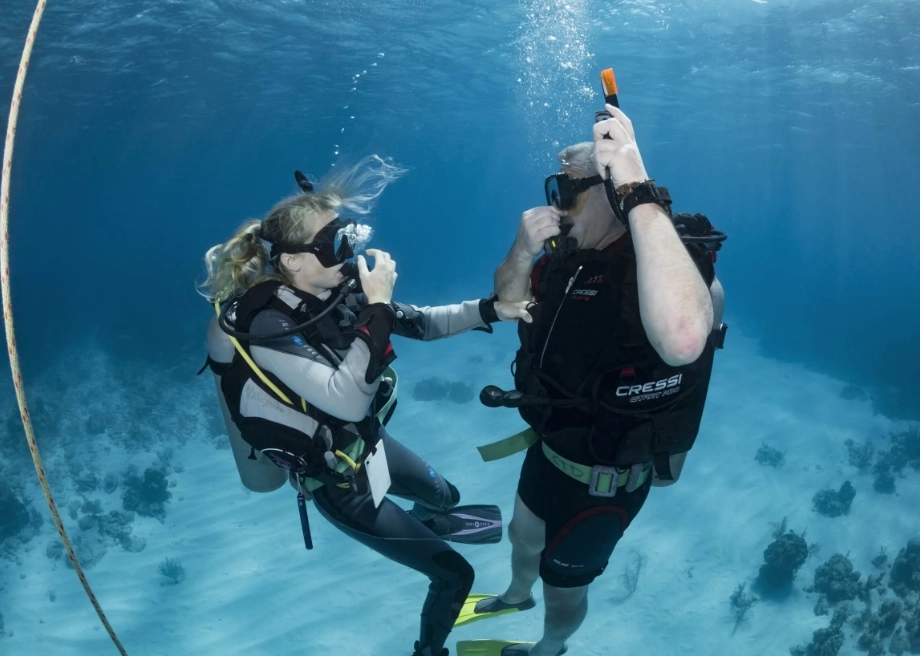
The course splits into three parts: knowledge development (the boring but necessary theory), confined water dives (pool sessions where you learn skills like mask clearing and regulator recovery), and open water dives (four real dives in a lake or ocean, typically spread over two days).
Here's the part nobody tells you upfront: the pool sessions are where 80% of people almost quit. Not the ocean. The pool. Mask clearing in 4 feet of water feels weird the first time. Regulator recovery — finding your breathing tube after it's knocked out — triggers a panic reflex in some people. They freeze.
But here's the trick. I tell my students to practice the "no-mask breathing" drill in a bathtub or shallow end before the course. Just sit underwater without a mask and breathe through your regulator for 30 seconds. Do it three times. By the time you hit the pool, that reflex is already half-trained.
The one non-negotiable: You must be comfortable floating in water too deep to stand. If you can't do a 10-minute float and a 200-meter swim (any style, no time limit), practice that first. I've watched people waste $400 on a course they couldn't finish because they panicked during the swim test.
Step-by-Step: How to Get Scuba Certified Without the Headache
Step 1: Do the E-Learning Before You Book Anything
PADI and SSI both offer online courses for $130–$180. You can start the theory at home, on your own schedule. Finish it before your first pool session. Why? Because trying to cram theory between dives on vacation is miserable. I've seen people up at 11 PM in a hostel lobby, half-asleep, trying to pass the final exam. Do it at home.
Step 2: Pick Your Course Format Carefully
Three main paths exist:
- Local dive shop (most common): You do pool sessions near home, then a weekend of open water dives at a local lake or quarry. Cost: $300–$500 total. Takes 3–4 weeks if you stretch it. Best for people who want a slower pace and a local instructor they can ask questions later.
- Vacation/resort course: You do e-learning before you fly, then pool + ocean dives in 3–4 days at a tropical destination. Cost: $400–$700 (often more), plus travel. Fast but frantic. I've seen people finish with 4 dives in 3 days and feel rushed. You learn to pass the skills, not to enjoy diving.
- Referral route: Do pool and theory at home, get a referral form, then do your open water dives on vacation. Cost: $250–$400 at home + $200–$300 for the ocean dives. This is my personal recommendation. You get the best of both worlds: solid local training and a beautiful final week.
Step 3: Show Up Prepared for the Pool Session
Bring your own mask, snorkel, and booties if possible. Rental masks leak. Rental snorkels are... questionable. A $40 mask that fits your face properly will save you an hour of frustration. Try masks on at a shop — press it to your face without the strap. If it sticks and holds when you inhale, it seals well.
For the pool, wear a rash guard or swimsuit. Don't overthink it. And eat something light an hour before. The one time I skipped breakfast before a pool session, I got so cold during the 45-minute skill circuit that my teeth chattered uncontrollably.
Step 4: Nail the Open Water Dives
Four dives. The first two are mostly skills: neutral buoyancy, emergency ascents, removing and replacing your gear underwater. The last two feel like actual diving. In my experience, the first dive is the hardest — not because of the skills, but because the cold and unfamiliarity hit hard. Wear a wetsuit that fits. A loose wetsuit is colder than a tight one. I don't care if it's a 3mm and you're in Florida — a flush of cold water down your back during the first mask clear will wake you up.
Real Costs: What You'll Pay and What You Can Skip
Let's get specific. Here's a typical breakdown for a PADI Open Water course through a local shop (US pricing, varies by region).
| Item | Cost Range | Can You Skip It? |
|---|---|---|
| E-learning / theory | $130–$180 | No (required by most agencies) |
| Pool session + instruction | $150–$250 | No, unless you do referral |
| Open water dives (4) | $100–$200 | No, but you can do them on vacation |
| Rental gear (mask, fins, regulator, BCD, wetsuit) | $50–$100 | Rent, don't buy yet |
| Certification card (digital) | $30–$50 | No (but some shops include it) |
| Logbook | $15–$25 | Yes, you can use an app |
Total realistic range: $375–$700.
Watch out: Some resort courses quote a low price ($299) but then charge extra for gear rental, certification card, and even the boat ride to the dive site. Ask upfront: "Does this price include all gear, all dives, and the certification card?" If they hesitate, walk away.
PADI vs SSI vs NAUI: Does the Agency Matter?
Short answer: not much for beginner certification. All major agencies follow ISO standards and give you a card that's accepted worldwide. The real difference comes down to the instructor. A great instructor at a small SSI shop will teach you more than a bored PADI instructor at a cattle-call resort.
But here's what I've noticed after diving with hundreds of people: PADI's e-learning platform is slightly more polished and easier to navigate on mobile. SSI's digital materials are fine but sometimes clunky. NAUI tends to attract a slightly more old-school crowd and has fewer shops globally. For most people, pick the agency your local shop uses. Don't overthink this.
Mistakes I See Every Single Week (And How to Avoid Them)
Mistake 1: Trying to "finish quickly" on vacation. I watched a student in Cozumel do all 4 open water dives in two days with no rest. He passed, but he was so exhausted and stressed that he didn't actually enjoy any of it. His logbook notes said "survived." That's not the goal. Take the 3–4 day version even if it costs a bit more.
Mistake 2: Not buying a mask before the course. Rental masks are a gamble. A leaking mask means you constantly clear it, which means you burn through air faster and feel anxious. Buy a mask that seals. It's the single best $50 you'll spend on this sport.
Mistake 3: Skipping the swim test practice. The 200-meter swim isn't timed, but people still panic. You can swim at a leisurely breaststroke. If you're not a confident swimmer, spend two weeks doing 200 meters in a pool three times a week. By the time you test, it feels routine.
Mistake 4: Ignoring the cold. Shivering underwater is dangerous — you lose fine motor control and can't think clearly. If your open water dives are in a cold lake (under 18°C / 65°F), get a 5mm wetsuit with a hood, or at least a hooded vest. I keep a 3mm shorty for tropical water and a 7mm for cold water. Gear matters.
Mistake 5: Not asking about the instructor ratio. PADI allows up to 8 students per instructor. That's too many for a nervous beginner. Ask for a class with 4 or fewer. A good shop will accommodate you. If they say "we always have 8," find another shop.
Straight Answers to the Questions Google Can't Answer Well
How long does it really take to get scuba certified if I have a full-time job?
You can finish in two weekends if you do e-learning on your own time. Friday evening: theory exam. Saturday–Sunday weekend one: pool sessions. Weekend two: four open water dives. That's 4 days of in-person work total. I've had students finish in 10 days doing one pool session per weeknight plus a weekend of dives. It's doable but you need to stay on top of the e-learning.
Why do I feel panicked during the mask removal skill when I've been swimming my whole life?
Because your brain treats "water on face + no visible exits" as a drowning trigger. It's not about swimming ability — it's a reflex. The fix: practice in a bathtub with just your regulator in (no mask, no fins). Sit underwater for 30 seconds, breathing normally. Do it five times a day for three days before your pool session. The panic fades. I've seen lifelong swimmers freeze on this skill, and I've seen non-swimmers nail it after bathtub practice.
Can I get certified if I have a mild asthma history?
You need a doctor's clearance, not a blanket no. The key is whether your asthma is exercise-induced and whether you're currently symptomatic. A pulmonologist who understands diving medicine will assess your risk. Don't hide it from your instructor — they can't help you if they don't know. I've certified students with well-managed, non-active asthma who got clearance. The form (RSTC medical statement) is standard and your instructor will have it.
What's the deal with the "referral" option — how does it actually work?
You do the theory and pool sessions at a shop near home. They give you a signed referral form (usually valid for 6 months). Then you take that form to a shop at your vacation destination. They do your four open water dives and issue the certification. Cost: $250–$350 at home, $200–$300 on vacation. The benefit: you're not cramming theory and pool skills into the first two days of a trip. You arrive already comfortable with the gear, so the ocean dives are actually fun. Downside: two separate payments and you need to double-check that both shops use the same agency (most accept cross-agency referrals but confirm first).
Do I need to own my own gear to start the course?
Own your mask, snorkel, and booties. Rent everything else. A mask that seals is the difference between a calm dive and a stressful one. You don't need to buy a $200 regulator for a beginner course. Rent the BCD, regulator, wetsuit, and tanks from the shop. Wait until you have 20+ dives logged before spending serious money on gear. I still rent when I travel — it's cheaper than paying baggage fees.
Getting certified isn't about passing a test. It's about building the reflex and comfort that make diving feel natural. The course is the beginning, not the finish line. Do the bathtub drills, buy a mask that fits, and pick a shop with small class sizes. That's the real secret that no certification card tells you.
This article was fact-checked against current PADI and SSI training standards and medical screening guidelines.
Leave a Comment