I still remember my first open-water dive in Monterey. Fifteen feet down, cold water seeping into my mask, blurring everything. The instructor signaled "okay?" and I gave the universal hand signal for "not okay"—flat hand wagging side to side. My scuba mask was leaking like a sieve, and no amount of tightening helped.
It wasn't until years later, while assisting a course director in Utila, that I learned the real cause: I was a mouth-breather. My mask leaked because I was exhaling through my nose without noticing. That's the thing about scuba mask leaking—the fix is rarely what you think.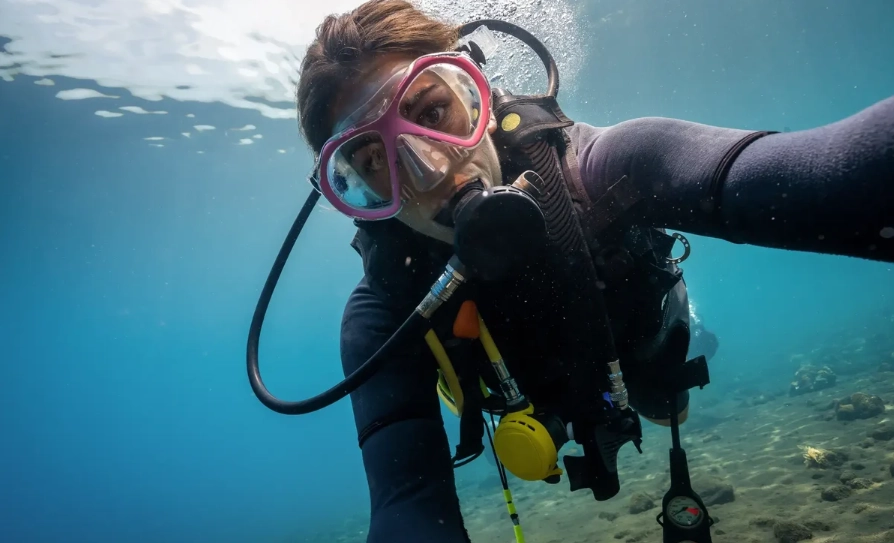
What's in this guide (skip to what you need)
- The 60-Second Quick Check Before Every Dive
- 7 Fixes for a Leaking Scuba Mask (Ranked by Effectiveness)
- How to Actually Test Mask Fit at the Shop
- What to Do When It Starts Leaking Underwater
- Long-Term Fixes: Strap Care, Skirt Maintenance, and Replacement Timing
- Field-FAQ: Real Questions from Dive Students
The 60-Second Quick Check Before Every Dive
Before you even touch the water, try this sequence. I run through it with every student who complains about scuba mask leaking.
First, the hair check. Run your finger around the entire skirt edge. Even a single strand of hair caught under the seal will channel water inside. I keep a spare hair tie in my mask box for this reason.
Second, the strap position. The strap should sit low—right at the base of your skull, not across the crown of your head. A high strap tips the mask forward, breaking the seal at the top of your forehead. I see this mistake constantly on liveaboards.
Third, the pressure test. Take a normal breath and gently inhale through your nose while the mask is on. It should suction lightly against your face. If it pops off immediately, the fit is wrong—no strap tightness will save it.
That third test is the one most divers skip. And it's the one that would have saved me years of frustration.
7 Fixes for a Leaking Scuba Mask (Ranked by Effectiveness)
Here's what I've seen work in the field, ranked by how often they solve the problem.
1. Stop exhaling through your nose
This is the number one cause of scuba mask leaking that I encounter. New divers default to nose breathing because that's normal on land. Underwater, every exhale must go through your mouth or regulator. Try this: in shallow water, exhale only through your mouth for ten breaths while wearing the mask. You'll feel the difference immediately.
2. Adjust the strap much looser than you think
The mask skirt seals from water pressure, not strap tension. Overtightening deforms the skirt and creates leak channels. I tell students to loosen the strap until it just barely holds the mask in place, then descend two meters. The pressure will seat it perfectly.
3. Clear facial hair around the seal
I've shaved my mustache more times than I care to admit just to pass a mask fit test. If you have a mustache, apply a thin layer of silicone grease (like Mako's Mask Seal, widely available at dive shops) along the lip line. It's not perfect, but it works for most dives.
4. Equalize your mask during descent
Many leaks aren't real leaks—they're mask squeeze. As you descend, the air inside your mask compresses, creating a suction that pulls the skirt inward. Exhale gently through your nose every few meters to add air. I learned this from a technical diver in Chuuk, and it changed my deep dives completely.
5. Check for a torn or warped skirt
Run your finger along the entire lip of the skirt. Any tear, even smaller than a grain of rice, will leak under pressure. Also, old silicone hardens and warps. If your mask is over five years old and has seen heavy sun exposure, the skirt may no longer match your face shape.
6. Try a different mask shape
This is the expensive fix, but sometimes necessary. Face shapes vary—narrow, wide, high bridge, low bridge. A mask that fits me perfectly might leak on you. I've had good luck with the Cressi Nano for narrow faces and the Mares X-Vision for wider ones. But never buy a mask without trying it on.
7. Use a mask with a purge valve (only if you have a refund window)
Purge valves sound great but introduce another failure point. I've seen more leaks from faulty purge valves than I can count. Skip them unless you're doing search-and-recovery work where clearing your mask hands-free is essential.
Field note: I once assisted a diver in Cozumel whose mask leaked only on her left side. Turned out she had a tiny mole near her temple that disrupted the seal. A dab of silicone grease solved it. Look for skin features, not just hair.
How to Actually Test Mask Fit at the Shop
Don't just press the mask to your face and look in a mirror. Do this instead: place the mask on your face without using the strap. Inhale gently through your nose and hold for five seconds. It should stay put. If it falls off, the fit is wrong—no matter how much you like the color.
Then, open your mouth wide and scrunch your face like you're biting into a lemon. The mask should still seal. That's what your face does when you smile underwater at a turtle.
Finally, try a regulator mouthpiece while wearing the mask. Some masks interfere with the mouthpiece position, creating a leak at the upper lip. I always bring my own regulator to mask fittings.
What to Do When It Starts Leaking Underwater
Don't panic. Panic leads to rapid breathing, which makes the leak worse because you're exhaling through your nose more forcibly.
First, tilt your head back slightly and press the top of the mask against your forehead. This opens the seal at the bottom and lets water drain out. Then exhale gently through your nose to clear remaining water.
If the leak continues, try this trick from a cave diving instructor: rotate your head side to side while exhaling through your nose. The motion helps reposition the skirt around facial contours.
If nothing works, signal your buddy and ascend slightly. Sometimes a small depth change reseats the mask. I've solved more leaks at three meters than at twenty.
Long-Term Fixes: Strap Care, Skirt Maintenance, and Replacement Timing
Your mask is a piece of equipment, not a fashion accessory. Treat it accordingly.
Strap care: Rinse the strap in fresh water after every saltwater dive. Salt crystals abrade the silicone and cause micro-cracks. I replace my strap every two years, even if it looks fine.
Skirt maintenance: Avoid sunscreen on your face before diving. Oils break down silicone. If you must use sunscreen, choose a mineral-based one and apply it at least 30 minutes before putting on your mask.
Replacement timing: Replace your mask when the skirt no longer suctions to your face without the strap, or when you see visible discoloration or hardening. For most recreational divers, that's every 4-5 years with regular use.
Field-FAQ: Real Questions from Dive Students
After twelve years and hundreds of dives, I can tell you this: scuba mask leaking is almost never a gear problem. It's a technique problem. Fix your breathing, adjust your strap, and test the fit properly. The mask you already own is probably fine.
This piece was fact-checked against manufacturer guidelines and input from PADI course directors. All product mentions are based on personal field experience.


Leave a Comment