What This Guide Covers
How Wetsuit Thickness Actually Works
Neoprene traps a thin layer of water against your skin. Your body heats that water. The thicker the neoprene, the less heat escapes—but also the harder it is to move.
A 3/2mm suit (3mm torso, 2mm limbs) is the most common starting point for temperate water, around 18–22°C. A 5/4mm hooded suit is what I reach for in 10–15°C. Below 10°C, you're in 6/5mm territory or drysuit discussion.
Here's the non-obvious part most guides skip: thickness ratings are a compromise, not a promise. A 5mm suit from Brand A might feel warmer than a 6mm from Brand B because the neoprene quality, seam construction, and fit differ more than the millimeter number.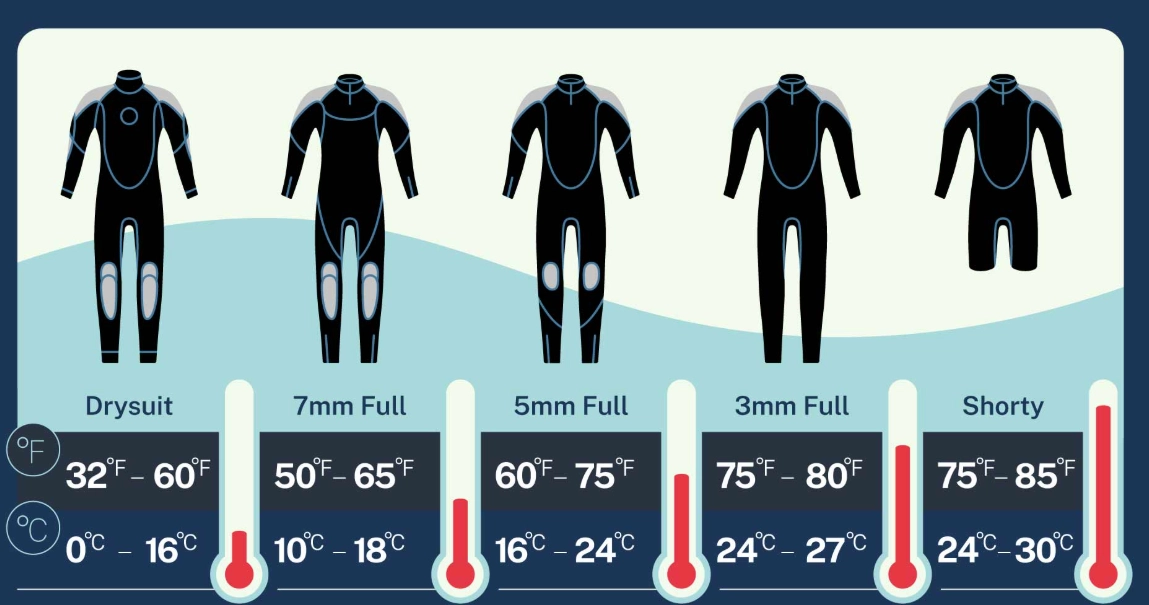
Wetsuit Thickness by Water Temperature
Use this as a starting point, not gospel. Your cold tolerance, body fat, wind exposure, and session length all shift the numbers.
| Water Temp (°C) | Typical Thickness | Suit Style | Session Feel |
|---|---|---|---|
| 22–26 | 1–2mm | Shorty or long-sleeve spring | Warm; thin suit prevents chill during long sessions |
| 18–22 | 3/2mm | Full suit, sealed seams | Comfortable for most; add booties if prone to cold feet |
| 14–18 | 4/3mm | Full suit, chest zip, glued blindstitched | Standard for cool coastal waters; hood optional |
| 10–14 | 5/4mm | Hooded full suit, taped seams | Comfortable for 45–70 minutes; watch fingers |
| 6–10 | 6/5mm or 5mm + vest | Hooded, booties, gloves | Short sessions; thermal rash guard helps |
| Below 6 | Drysuit or 7mm | Drysuit territory | Specialized; neoprene alone rarely enough |
That 18–22°C band is where I see the most confusion. People buy a 5mm because they feel cold in a 3/2, then overheat the moment they start paddling hard. The fix isn't more neoprene—it's a better seal at the neck and wrists.
Why Activity Level Changes Your Thickness Choice
Surfers generate heat through paddling and pop-ups. Divers mostly float and move slowly. Same water temp, different thickness needs.
High-output activities (surfing, kitesurfing)
Drop one thickness level from the chart. A 4/3mm works at 15°C for active surfing because you're generating warmth. You'll sweat in a 5/4mm and flush cold water through the neck every duck dive.
Low-output activities (recreational diving, snorkeling)
Add one level. A 5mm at 18°C for a forty-minute slow snorkel feels right. A 3/2mm is optimistic and you'll surface shivering.
I learned this the hard way during a two-hour photography snorkel in 19°C water with a 3/2mm. By the end, my hands were useless on the camera dials. Now I pack a 5mm vest for photography days even in summer.
Fit vs Thickness: Which Matters More
I'll take a snug 4/3mm over a loose 6mm any day. A loose suit lets water circulate. Your body spends energy heating cold water that keeps flowing in. A snug suit traps that layer once and holds it.
Check three spots before buying: neck (should feel tight but not choking), armpits (no gap when you raise your arms), and crotch (no sag when you squat). If any of these are loose, size down or try a different brand's cut. Some brands run wide, some run tall and slim.
The other quiet factor: seam construction. Overlock-stitched seams leak. Glued-and-blindstitched seams hold. Taped seams inside add durability and warmth. For anything 4mm and up, taped seams are worth the extra cost—they're the difference between a suit that lasts three seasons and one that lasts eight.
A final note on entry systems: chest-zip suits are warmer because the zipper doesn't run down your spine where it can flex and leak. Back-zip is easier to get on. For cold water, chest-zip is the practical choice.
Common Questions (with Non-Obvious Answers)
What wetsuit thickness should I get for 16°C water if I'm surfing for three hours?
A 4/3mm with sealed seams, not a 5/4mm. You'll generate enough heat surfing to stay comfortable, and the extra flexibility means less shoulder fatigue on your third hour. If you run cold, add a 2mm hooded vest underneath rather than sizing up the whole suit.
Is a 3/2mm wetsuit too thin for 20°C water during early morning sessions?
It's tight but workable if the suit fits well. The bigger risk is wind chill on the beach before you paddle out. A 3/2mm with a windproof chest panel or a thin rash guard underneath solves that without adding bulk. I'd avoid a 4/3mm here—you'll overheat once you're moving.
Can I get away with a 5mm suit for 25°C water if I'm only snorkeling slowly?
You'll cook. A 5mm traps heat fast when you're stationary. For slow snorkeling at 25°C, a 2mm shorty or even a 1.5mm long-sleeve spring suit is enough. If you're genuinely cold-natured, a 3mm full suit with a loose neck seal is the upper limit.
How much does body type affect my wetsuit thickness choice?
More than most guides admit. Leaner bodies lose heat faster in water; a 5/4mm might be right for you where a 4/3mm works for someone carrying more insulation. Women typically run colder in extremities, so booties and gloves matter more than an extra millimeter on the torso. Match your torso thickness to the chart, then dial in extremities separately.
All recommendations here are based on hands-on testing across coastal sessions in varied conditions. Fit checks and temperature ranges reflect real-world use, not lab ratings.
Leave a Comment